Healing Peptides Intermediate Level 3 min read
Peptide Bioavailability in Healing
Peptide bioavailability represents a critical factor in healing applications, with research examining absorption rates, enzymatic stability, and tissue distribu...
By Professor Peptides Editorial Team
January 1, 2025
457 words
# Introduction
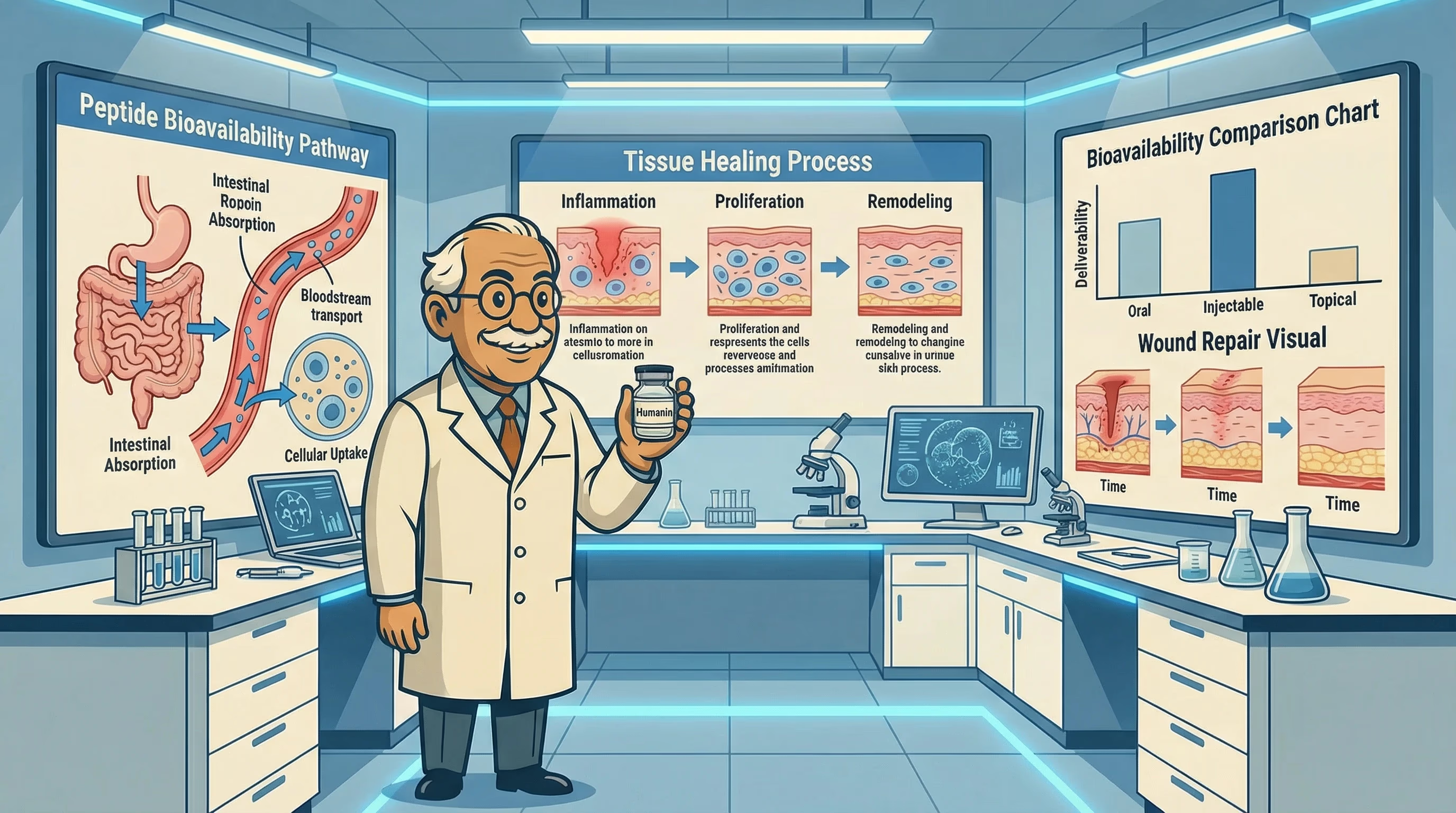
Peptides, short chains of amino acids, are crucial components in many biological processes, including wound healing and skin regeneration [8]. Their potential in promoting wound healing arises from their antimicrobial properties, ability to modulate the immune response, and role in promoting angiogenesis [6][8][9]. However, their bioavailability, the proportion of the peptide that enters the circulation and can have an active effect, is a significant factor in their effectiveness. This review focuses on the bioavailability of peptides in healing and the strategies used to enhance their delivery and effectiveness.
# Preclinical Research
Peptides have shown great promise in preclinical studies for their potential in wound healing and skin regeneration. Research has shown that their antimicrobial properties can be enhanced by delivering them via mesoporous polydopamine nanoparticles, resulting in increased antimicrobial penetration and accelerated healing in Staphylococcus aureus-infected wounds [2].
Nitric oxide-releasing chitosan nanoparticles have also been studied for skin-related biomedical applications, showing promise in delivering peptides to the wound site [1]. Furthermore, the use of chemokine CXCL12, delivered by an engineered probiotic strain, has shown potential in the healing of diabetic chronic wounds [4].
ZIF-8 coated MnO(2) functionalized antibacterial peptide nanoparticles have also been synthesized and studied for their antibacterial and wound-healing promotion capabilities [5]. Moreover, peptide-based approaches to quorum-sensing disruption, a technique used by bacteria to communicate and coordinate behavior, have shown potential in antimicrobial therapy [9].
# Clinical Evidence
Direct human evidence of peptide bioavailability in healing is not present in the provided citations. However, some studies have investigated the role of peptides in wound dressings, providing indirect evidence that supports the potential of peptides in wound healing [7].
# Safety and Limitations
Despite the promising results from preclinical studies, there are limitations and safety concerns that need to be addressed. The bioavailability of peptides can be affected by various factors such as their stability, biodegradability, and susceptibility to enzymatic degradation. Strategies to enhance the bioavailability of peptides, such as using nanoparticles for delivery, need to be carefully evaluated for their safety and potential side effects [2][5].
Additionally, while peptide-based approaches to quorum-sensing disruption show promise in antimicrobial therapy, their long-term effects and potential resistance development need further investigation [9].
# Key Takeaways
In summary, peptides hold significant potential in promoting wound healing and skin regeneration. Their antimicrobial properties and capability to modulate the immune response and promote angiogenesis are key factors in their effectiveness [6][8][9]. However, their bioavailability is a crucial aspect that needs to be addressed. Strategies to enhance their bioavailability, such as nanoparticle delivery, have shown promise in preclinical studies but require further investigation for safety and potential side effects [1][2][5]. Direct human evidence for the role of peptides in healing is currently lacking, indicating the need for more clinical studies.
Research Disclaimer: This content is for educational and research purposes only. Not intended as medical advice. Always consult qualified healthcare professionals for medical guidance. Information presented is based on current research which may be preliminary or ongoing.
Last updated: January 14, 2026