Growth Hormone Peptides 4 min read
Hexarelin: Potent GH Releasing Peptide Studies
Hexarelin research demonstrates exceptional potency in growth hormone releasing peptide studies, with clinical data documenting enhanced GH stimulation compared...
By Professor Peptides Editorial Team
January 1, 2025
601 words
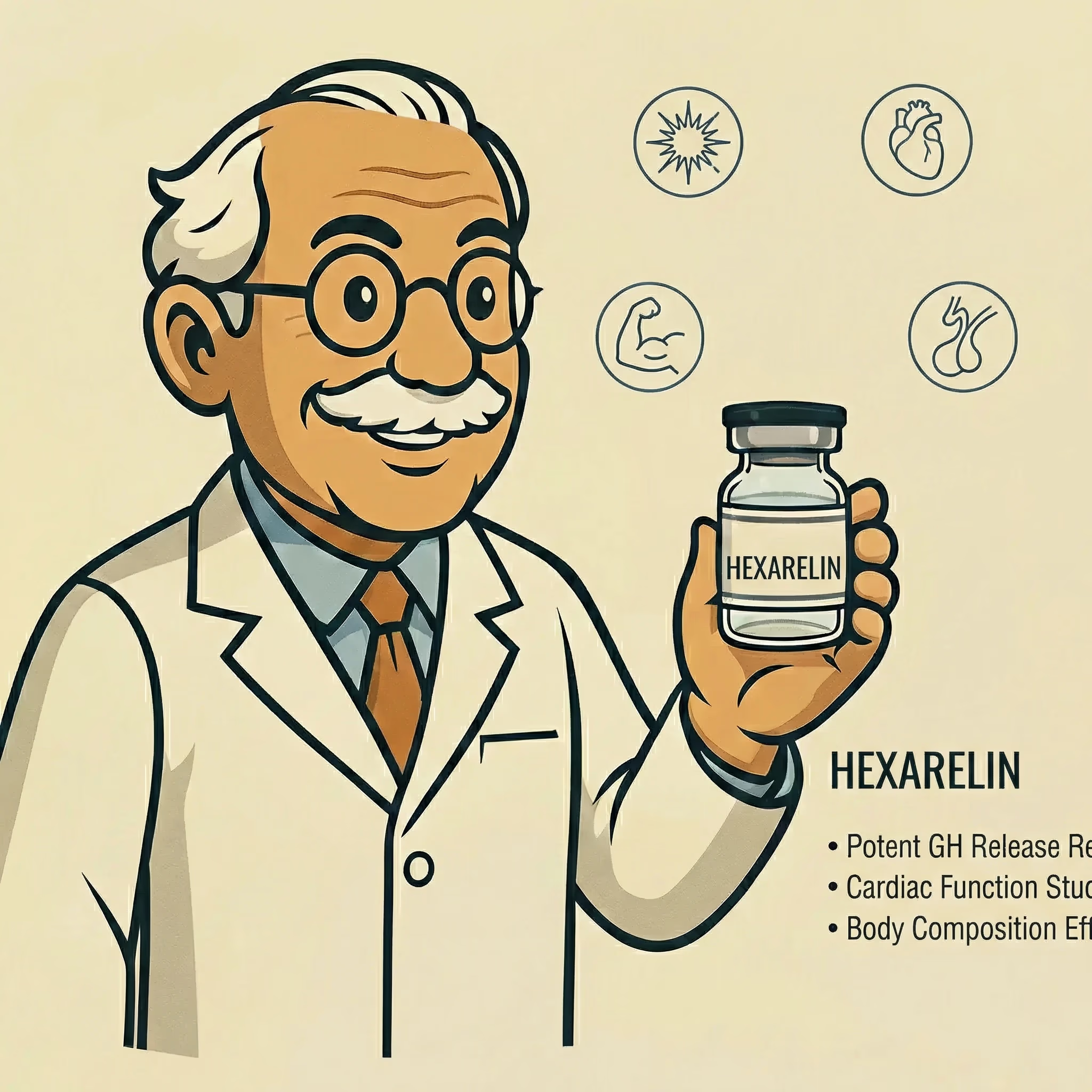
# Hexarelin: Potent GH Releasing Peptide
Hexarelin is a synthetic peptide that has been extensively studied for its potent ability to stimulate the release of growth hormone (GH), a hormone that plays vital roles in growth, metabolism and immunity [2][10]. This review will delve into the understanding of hexarelin action, its comparison with natural and other synthetic GH secretagogues, and its safety and limitations based on preclinical and clinical studies.
## Preclinical Research
Hexarelin's mechanism of action, primarily its GH-releasing activity, has been studied in rats [5]. The peptide stimulates the secretion of GH in these animals, suggesting a potential application in circumstances where an increase in GH is desirable [5]. A study on conscious male rats showed that both repeated doses and continuous infusions of hexarelin lead to a significant increase in GH [10].
## Clinical Evidence
Human studies further corroborate hexarelin's potent GH-releasing activity. An investigation on the influence of exogenous GH on hexarelin-induced GH release found that the peptide's effect is influenced by the level of exogenous GH [3]. This implies that hexarelin can enhance the body's GH response, potentially benefiting individuals with low GH levels.
Hexarelin's GH-releasing capacity has been compared to that of ghrelin, a natural GH secretagogue, and GH-releasing hormone [2]. The study revealed that while ghrelin and hexarelin possess similar endocrine activities, hexarelin demonstrated a more potent GH-releasing effect [2]. This suggests that hexarelin could be a superior choice when a robust GH increase is required.
Evidence also suggests that hexarelin can stimulate prolactin secretion in patients with acromegaly but not in hyperprolactinaemic patients [1]. Prolactin is another essential hormone that plays crucial roles in various bodily functions, including reproduction and lactation. However, the finding also indicates that hexarelin's effect can vary depending on the individual's health status.
Moreover, hexarelin was found to stimulate GH secretion in pubertal children and adults but not in prepubertal children and elderly subjects [9]. This differential effect suggests that hexarelin's GH-releasing capacity might be influenced by age and pubertal status.
In patients with homozygous beta-thalassemia, a genetic blood disorder, hexarelin was able to induce GH release [7]. This provides evidence for hexarelin's potential therapeutic use in certain disease conditions.
## Safety and Limitations
While hexarelin has shown promise in its GH-releasing capacity, certain limitations and safety concerns exist. One of the challenges is the potential interaction of hexarelin with somatostatin, a hormone that inhibits GH release [8]. This interaction could possibly limit the effectiveness of hexarelin in stimulating GH release.
The effect of repeated administration of hexarelin on GH responsivity is another area of concern [4]. A study found that repeated administration of hexarelin and GH-releasing hormone could decrease the body's GH responsivity [4]. This suggests that prolonged use of hexarelin might lead to reduced effectiveness.
Furthermore, a dose-response study on hexarelin-induced GH, cortisol, and prolactin release revealed that while hexarelin can stimulate the release of these hormones, the effect is dose-dependent [6]. Therefore, determining the optimal dosage is crucial for harnessing hexarelin's benefits while minimizing potential side effects.
## Key Takeaways
Hexarelin stands out as a potent GH-releasing peptide with promising implications for medical and biochemical research. Preclinical and clinical studies affirm its GH-releasing capacity, which is influenced by factors such as exogenous GH levels, age, pubertal status, and health conditions. It even outperforms natural GH secretagogues like ghrelin in terms of GH-releasing potency.
However, its interaction with somatostatin, diminished GH responsivity with repeated use, and dose-dependent effects pose challenges and safety concerns that merit further investigation. As we deepen our understanding of hexarelin, these insights will be pivotal in optimizing its therapeutic potential and minimizing risks.
Last updated: January 14, 2026