Growth Hormone Peptides 3 min read
CJC-1295: DAC vs No-DAC Research Comparison Studies
CJC-1295 research examines Drug Affinity Complex modifications affecting peptide half-life and clinical applications. Comparative studies analyze DAC versus No-...
By Professor Peptides Editorial Team
January 1, 2025
499 words
# CJC-1295: DAC vs No-DAC Research Comparison Studies
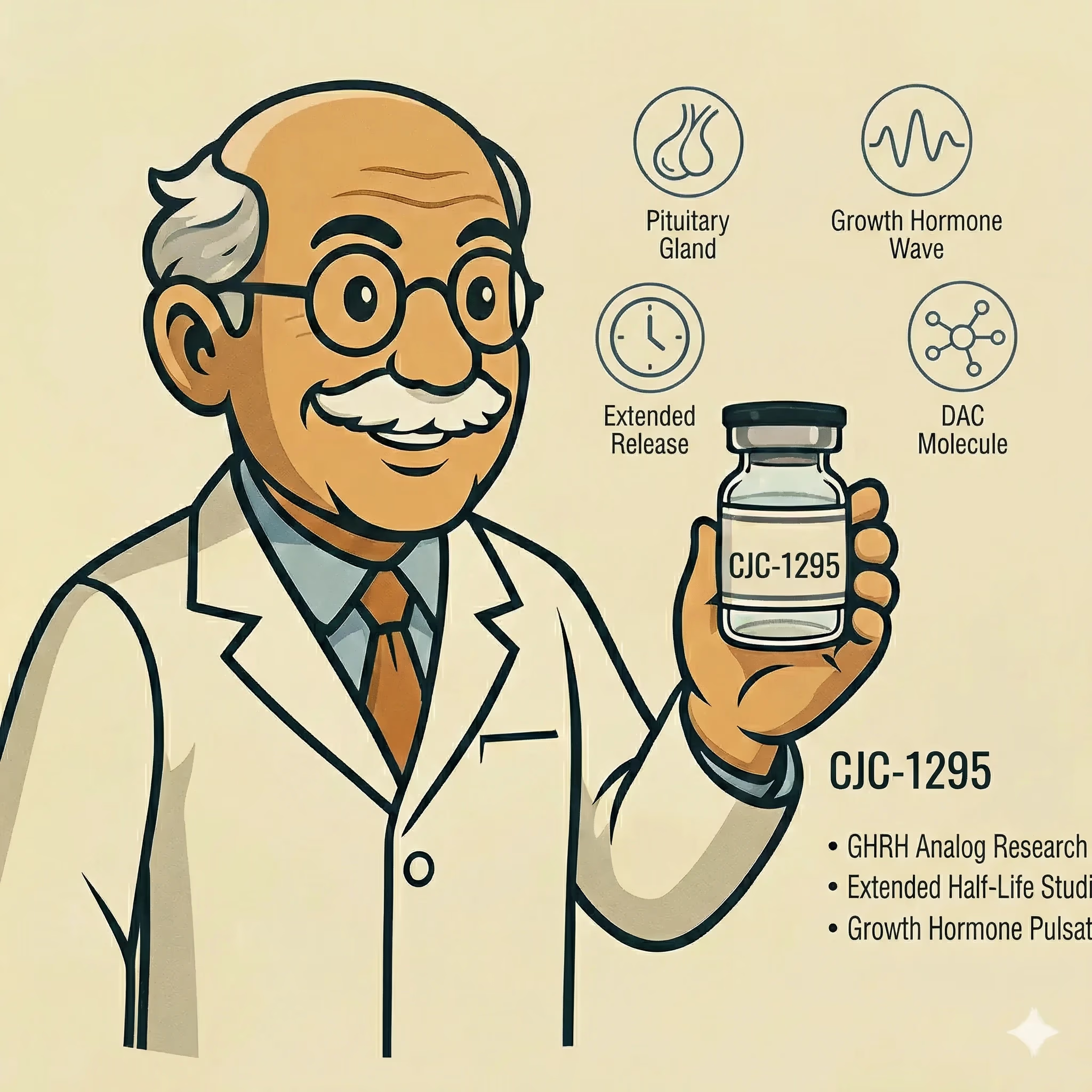
CJC-1295 is a synthetic peptide that has been used to stimulate the release of growth hormone (GH). Two versions of this peptide exist: one with a Drug Affinity Complex (DAC) and one without (No-DAC). These two versions differ in their pharmacokinetic profiles, which can have implications for their effects and potential uses. This review will delve into the research studies that have investigated the differences and similarities between CJC-1295 DAC and No-DAC.
## Preclinical Research
CJC-1295, a long-acting analog of GH-releasing hormone (GHRH), has been shown to have a prolonged stimulatory effect on GH and insulin-like growth factor I (IGF-I) secretion in healthy adults [1]. In animal models, the administration of CJC-1295 resulted in normal growth patterns [2]. This suggests that CJC-1295 may be a useful tool for promoting growth in conditions characterized by GH deficiency.
Studies have also shown that CJC-1295 maintains the pulsatile secretion of GH, even during continuous stimulation [3]. This is an important feature, as the pulsatile nature of GH secretion is a key aspect of its physiological function. This characteristic is believed to be maintained in both DAC and No-DAC versions of CJC-1295, although direct comparisons are not available in the provided research citations.
## Clinical Evidence
In human studies, CJC-1295 has been demonstrated to lead to consistent elevations in serum GH levels [1]. Notably, these effects were observed to last for up to a week after administration, indicating its potential as a long-acting GH-releasing agent. Further supporting this, another study identified CJC-1295 as a long-lasting GRF analog in the context of activating the GRF receptor on the anterior pituitary in rats [5].
It's also important to note that the activation of the GH/IGF-1 axis by CJC-1295 has been observed to result in changes in the serum protein profile of normal adult subjects [6]. This suggests that the peptide may have broad effects on protein metabolism.
## Safety and Limitations
While CJC-1295 has shown promising results in promoting GH release and normalizing growth, its safety profile and potential side effects remain to be fully elucidated. It is also important to distinguish between the DAC and No-DAC versions of CJC-1295 in this context. Unfortunately, direct human evidence comparing the safety profiles of CJC-1295 DAC vs No-DAC is not present in the provided research citations.
Furthermore, there is evidence of misuse of CJC-1295 in various contexts [7][8]. It is important to recognize that the non-medical use of such compounds can carry significant risks, including unknown long-term effects and potential interactions with other substances.
## Key Takeaways
In summary, CJC-1295, a long-acting analog of GHRH, has been shown to promote prolonged GH and IGF-1 secretion, normal growth in animal models, and changes in serum protein profiles in human subjects. The DAC and No-DAC versions of CJC-1295 are believed to have similar effects, but direct comparisons are currently lacking in the literature. While potential therapeutic applications are promising, the safety profile and potential for misuse of CJC-1295 warrant further investigation.
Last updated: January 14, 2026