General 3 min read
AOD-9604: Fat Loss Peptide Research
By Professor Peptides Editorial Team
January 1, 2025
517 words
# Introduction
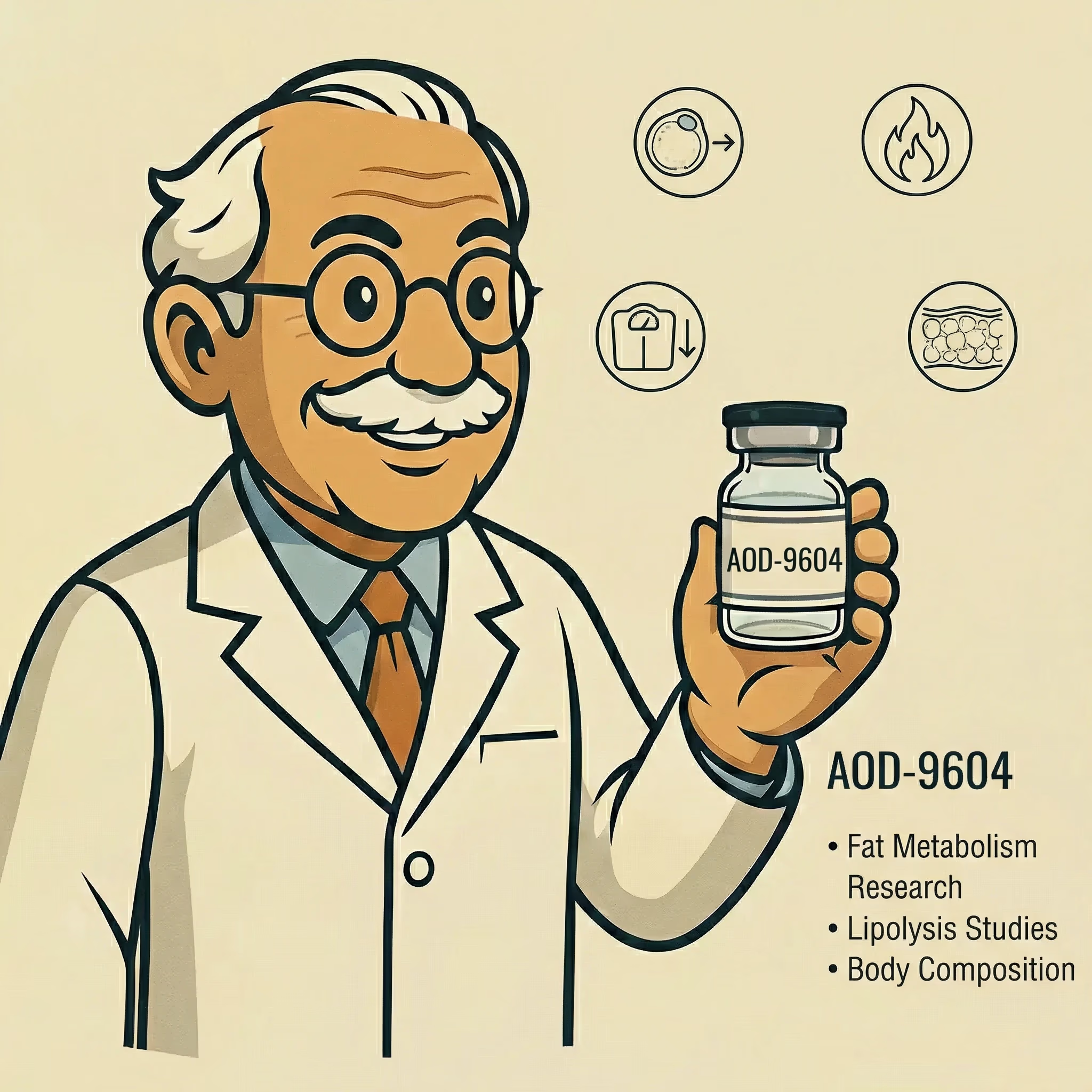
AOD-9604 is a modified fragment of human growth hormone (hGH) that has been shown to have potential fat-burning properties. This peptide, derived from the C-terminus end of the hGH, has been the subject of research in the field of obesity and weight management [1]. This article will review the existing research on AOD-9604, focusing on its effects on fat metabolism, weight loss, and its detection and in vitro metabolism.
# Preclinical Research
## AOD-9604 and Fat Oxidation
Early research on AOD-9604 focused on its potential to increase fat oxidation, the process by which the body breaks down fat to use as energy. Studies conducted on obese mice demonstrated that chronic treatment with AOD-9604 led to an increase in fat oxidation and subsequent weight loss [1]. It was noted that these effects were similar to those observed with treatment using hGH, suggesting that the fat-burning properties of AOD-9604 are derived from its parent hormone [1].
## AOD-9604 and Lipid Metabolism
Further research on AOD-9604 has also examined its effects on lipid metabolism. Lipid metabolism refers to the biochemical processes that the body uses to manage the intake, synthesis, transport, storage, and elimination of dietary fats and lipids. In studies conducted on obese mice and beta(3)-AR knock-out mice, chronic treatment with AOD-9604 resulted in changes to lipid metabolism [2]. The findings suggested that AOD-9604 may influence lipid metabolism in a way that promotes fat burning and contributes to weight loss [2].
# Clinical Evidence
While preclinical research has shown promise in the potential of AOD-9604 to promote fat burning and weight loss, it is important to note that this evidence comes from studies on mice. As of now, there is a lack of direct human evidence in the provided citations to support the claims about the effects of AOD-9604 on human subjects. Therefore, it is imperative that further clinical studies are conducted to validate these findings in human subjects.
# Safety and Limitations
Given the absence of clinical studies in the provided citations, the safety of AOD-9604 in humans remains uncertain. More research is needed to determine the potential side effects and long-term implications of using AOD-9604.
Additionally, the detection and in vitro metabolism of AOD-9604 have also been studied [3]. While these studies provide valuable insights for drug testing and regulation, they also underline the need for more comprehensive research to fully understand the metabolic fate and pharmacokinetics of AOD-9604 in the human body [3].
# Key Takeaways
AOD-9604 is a modified fragment of human growth hormone that has been shown in preclinical research to promote fat oxidation and influence lipid metabolism, potentially contributing to weight loss [1][2]. However, these findings are based on studies conducted on mice, and there is a lack of direct human evidence in the provided citations to support these claims. Further research is needed to validate these findings in humans and to assess the safety and long-term effects of AOD-9604. The detection and in vitro metabolism of AOD-9604 have also been studied, highlighting the need for a deeper understanding of how this substance is metabolized and eliminated from the body [3].
Last updated: January 13, 2026