Healing Peptides Intermediate Level 3 min read
TB-500 Wound Healing Studies
TB-500, a synthetic fragment of thymosin β4, exhibits notable wound healing properties through actin regulation and cell migration enhancement in laboratory res...
By Professor Peptides Editorial Team
January 1, 2025
591 words
# Introduction
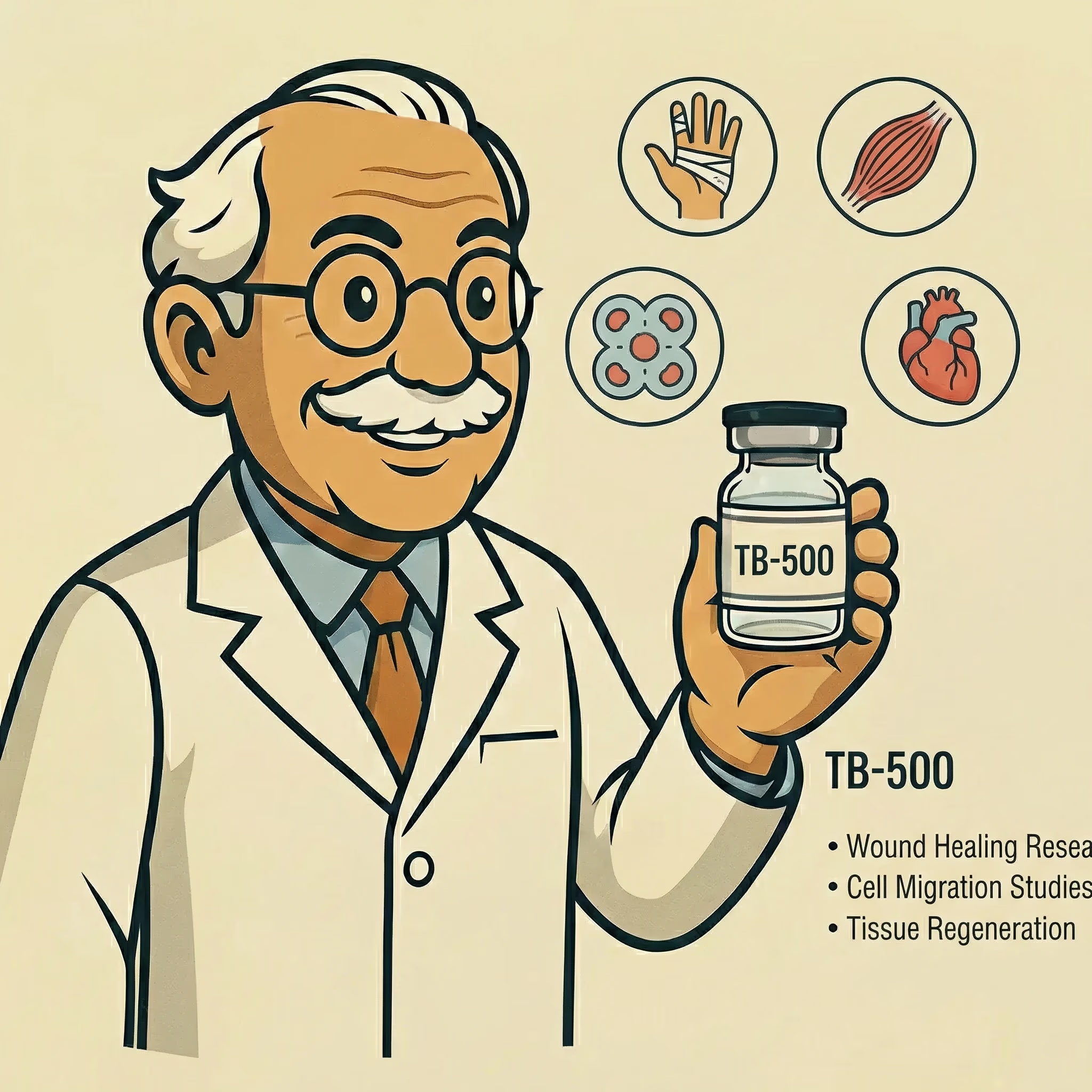
TB-500 is a synthetic version of an active region of thymosin β₄, a natural protein present in nearly all human and animal cells [1]. This peptide is known for its potential in wound healing and tissue repair, eliciting interest in the field of medical science. This article aims to review the current understanding of TB-500's role in wound healing, based on various preclinical and clinical research studies.
# Preclinical Research
Preclinical studies have greatly contributed to our understanding of TB-500's wound healing potential. The peptide has been studied in vitro (lab cultures) and in animal models, such as rats, providing insights into its effects at the cellular and physiological levels [2].
In an in-vitro experiment, TB-500 and its metabolites were quantified and their wound healing activities were screened [2]. This study found that TB-500 exhibited significant wound healing properties in cultured cells. Moreover, the study successfully established methods to quantify TB-500 and its metabolites, which is crucial for understanding the peptide's pharmacokinetics - how it's absorbed, distributed, metabolized, and excreted in the body [2].
Research on rats further supports the wound healing activities of TB-500. The synthetic peptide was found to effectively promote wound healing in animal models, confirming its potential for tissue repair [2].
In addition, a study investigated the use of a TB-500 peptide hydrogel to repair corneal injury, demonstrating the peptide's potential in ophthalmology [3]. This was an alkaline phosphatase-triggered spatiotemporal repair process, where the hydrogel containing TB-500 was applied to the injured corneal tissue. The results confirmed that this approach could effectively promote corneal wound healing [3].
# Clinical Evidence
While preclinical studies have shown promising results, direct human evidence from clinical studies is crucial to confirm TB-500's efficacy in wound healing.
However, based on the provided citations, there is currently no direct human evidence available from clinical trials on the use of TB-500 for wound healing. This does not mean that TB-500 is ineffective, but rather that more research is needed in this area.
# Safety and Limitations
The safety profile and limitations of using TB-500 for wound healing are vital considerations for both preclinical and clinical studies.
According to the existing literature, TB-500 has been detected in equine urine and plasma, suggesting that it gets absorbed and metabolized in the body [1]. However, the safety profile of TB-500 in humans is not clearly outlined in the provided citations.
There is also concern about the misuse of TB-500 in sports, given its potential to enhance tissue repair and recovery. Analysis of TB-500 in equine urine and plasma has been conducted as part of doping control, revealing the synthetic peptide's potential for misuse in competitive sports [1].
Furthermore, the adulteration and misbranding of drugs, including synthetic peptides like TB-500, poses a significant challenge [6]. This highlights the need for stringent quality control measures and regulatory oversight in the production and distribution of such peptides.
# Key Takeaways
TB-500, a synthetic version of an active region of thymosin β₄, has shown promising results in preclinical studies for wound healing and tissue repair [1][2][3]. However, the lack of direct human evidence from clinical trials necessitates further research to validate these findings in humans.
The safety of TB-500, its potential misuse in sports, and the risk of drug adulteration are important considerations in its use and development [1][6]. Future studies should focus on these aspects while exploring the peptide's therapeutic potential.
In conclusion, while TB-500 holds promising potential in wound healing, more comprehensive and rigorous studies are needed to fully understand its efficacy, safety, and limitations in humans.
Research Disclaimer: This content is for educational and research purposes only. Not intended as medical advice. Always consult qualified healthcare professionals for medical guidance. Information presented is based on current research which may be preliminary or ongoing.
Last updated: January 14, 2026