Industry Insights 4 min read
The Peptide Landscape: Current Trends and Future Breakthroughs
Explore the evolving world of peptide therapeutics, from current breakthrough treatments to emerging technologies shaping the future.
By Professor Peptides Editorial Team
August 21, 2024
671 words
# Introduction
Peptides, short chains of amino acids, have emerged as a promising research area in the medical and biochemical fields. This surge in interest is due to their specificity, efficacy, and safety, which have been demonstrated in numerous preclinical and clinical studies [5]. This article will delve into the current state of peptide research, its application in various medical scenarios, and the potential future breakthroughs in this exciting area.
# Preclinical Research
Preclinical research, which involves lab-based studies and experiments on animal models, is a vital stage in the development of new peptide therapies. It is at this stage that potential drugs are identified and their safety and efficacy are initially tested.
One of the most promising areas of preclinical research in peptides is in the field of neurodegenerative disorders, such as Alzheimer's disease. For instance, researchers are working on improving the detection of beta-amyloid, a peptide believed to play a role in the progression of Alzheimer's [1]. While this research is still in the preclinical phase, it promises to improve early detection and possibly contribute to the development of new treatments.
Another exciting area of preclinical research involves antimicrobial resistance. With the rise of superbugs, there is a growing need for new antimicrobial agents. Artificial intelligence (AI) is being used to map knowledge landscapes and identify emerging trends in antimicrobial resistance, including the role of peptides [2]. Although this research is still in its early stages, it could lead to significant breakthroughs in the fight against superbugs.
# Clinical Evidence
Clinical studies are a critical step in translating preclinical findings into real-world applications. They involve testing potential treatments on human subjects to gather data on their safety and efficacy.
In the area of cardiovascular diseases, peptides have shown promise in the long-term perspective of coronary revascularization [3]. This procedure, which is used to restore blood flow to the heart, could benefit from the use of peptides to enhance the process and improve patient outcomes. However, more clinical studies are needed to confirm these preliminary findings.
Cancer immunotherapy is another area where peptides have shown promise. Clinical trials are being conducted to evaluate the effectiveness of peptide-based cancer immunotherapies [4]. While these therapies are still in the experimental stages, early results indicate that they could revolutionize the treatment of cancer.
# Safety and Limitations
While peptides have shown promise in both preclinical research and clinical trials, there are some safety considerations and limitations to note. First, although peptides have demonstrated excellent specificity and efficacy, safety concerns remain. For instance, while peptides are generally well-tolerated, some can cause adverse reactions, such as hypersensitivity or allergic reactions [5].
Furthermore, there are some limitations to the use of peptides as therapeutic agents. For example, due to their size and structure, peptides can be susceptible to degradation in the body, which can reduce their effectiveness [6]. Also, some peptides may not be able to cross certain biological barriers, such as the blood-brain barrier, limiting their use in treating certain conditions [6].
# Future Breakthroughs
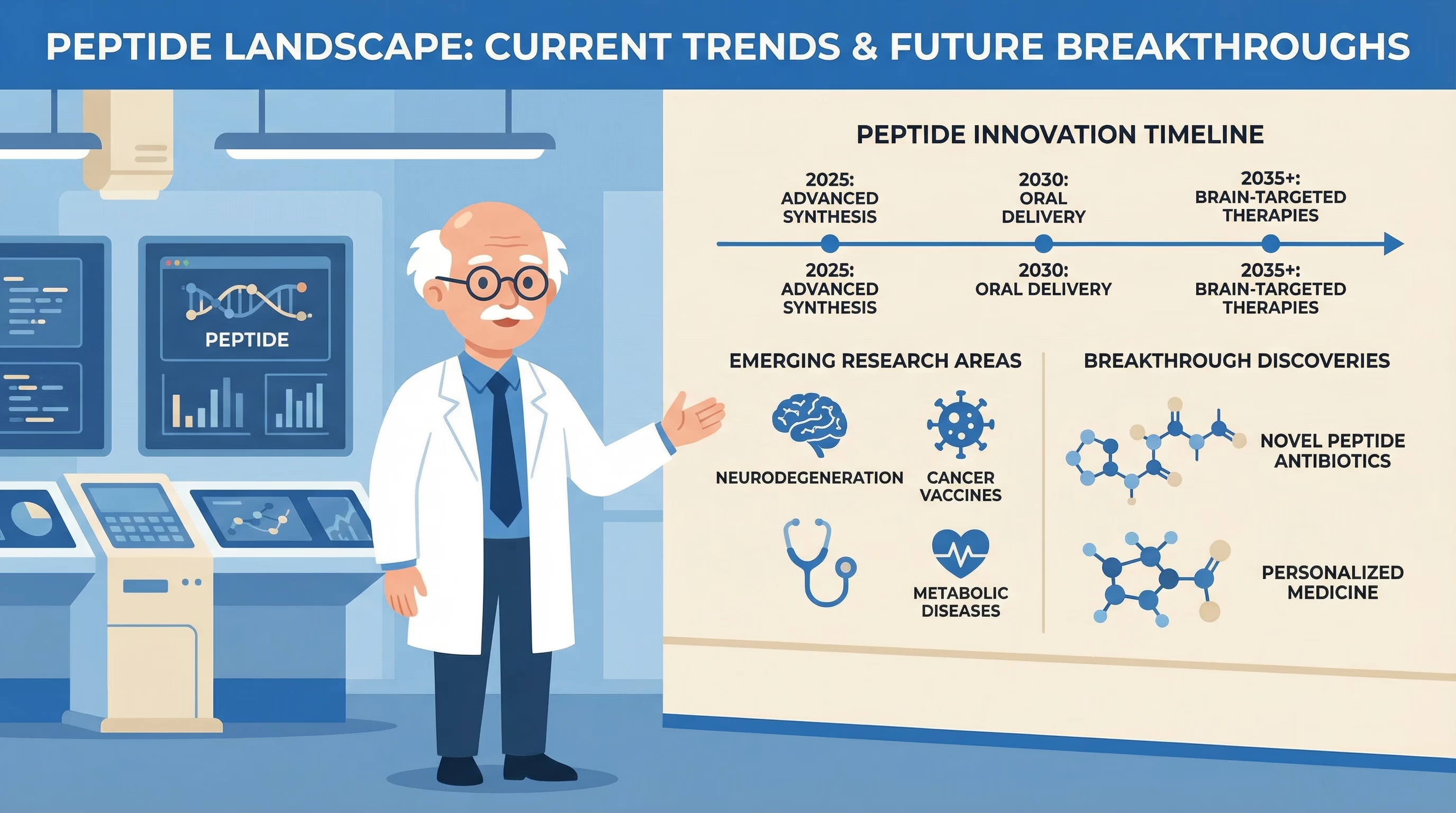
Despite these limitations, the future for peptide research looks bright. Advances in technology and understanding of biological systems are anticipated to drive significant breakthroughs in the field.
One such breakthrough could be the development of more stable peptide structures, which could enhance their therapeutic potential [6]. Additionally, advancements in AI could accelerate the discovery and development of new peptide drugs, particularly in the area of antimicrobial resistance [2].
Another potential breakthrough could be in the realm of personalized medicine. The specificity of peptides could enable the development of highly individualized therapies, tailored to a patient's unique genetic makeup and disease profile [5].
# Key Takeaways
The peptide landscape is rapidly evolving, driven by advances in technology and a growing understanding of their therapeutic potential. From preclinical research to clinical trials, peptides are showing promise in a range of medical applications, from neurodegenerative disorders to cancer immunotherapy. While safety concerns and limitations exist, future breakthroughs are anticipated to overcome these challenges, paving the way for a new era of peptide-based therapies.
Last updated: January 13, 2026