Growth Hormone Peptides 3 min read
MK-677 (Ibutamoren): Non-Peptide GH Secretagogue Clinical Data
MK-677 research examines non-peptide growth hormone secretagogue mechanisms through oral administration protocols. Clinical studies document sustained growth ho...
By Professor Peptides Editorial Team
January 1, 2025
476 words
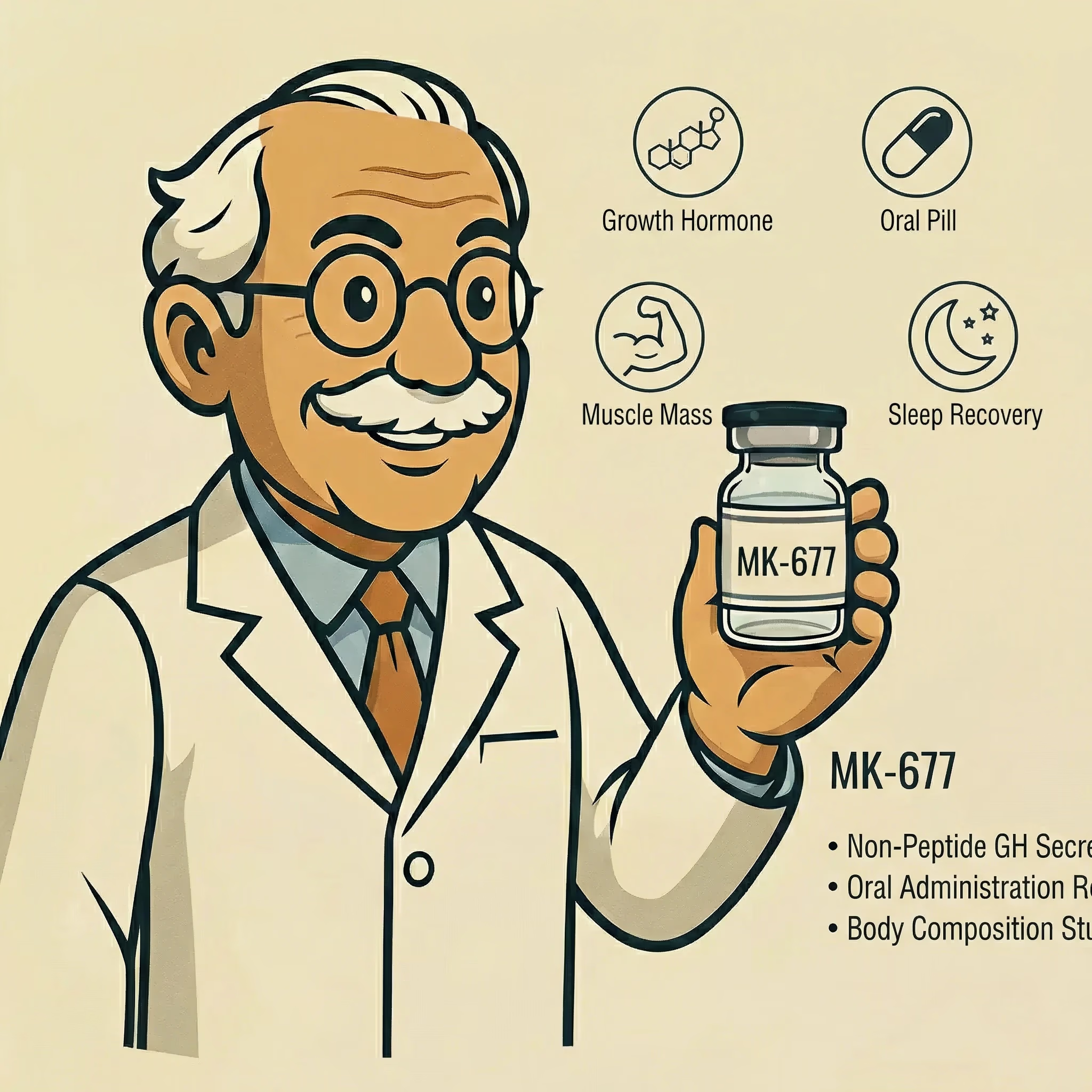
# MK-677 (Ibutamoren): Non-Peptide GH Secretagogue Clinical Data
Ibutamoren, also known as MK-677, is a non-peptide growth hormone secretagogue (GHS) that is orally active. A GHS is a substance that triggers the release of growth hormone (GH). This review discusses the clinical data related to MK-677, focusing on its role as a GH secretagogue.
## Preclinical Research
In preclinical studies, MK-677 has been identified as an agonist of the growth hormone secretagogue receptor (GHSR)[1][2]. The GHSR is a protein that, when activated, stimulates the release of growth hormone. MK-677 acts on this receptor, promoting the secretion of GH. Interestingly, adenosine, a substance that plays essential roles in cellular signaling and energy transfer, was also identified as an agonist of GHSR[1][2].
Another study showed that both ghrelin, a hormone known for stimulating appetite, and des-acyl ghrelin inhibit lipolysis (the breakdown of fats) in rat adipocytes (fat cells) via a non-type 1a GHSR[4]. This suggests that the GHSR has a broad range of physiological effects, not limited to GH release.
## Clinical Evidence
In a clinical study involving GH-deficient children, MK-677 was orally administered and was observed to affect the growth hormone-insulin-like growth factor I (GH-IGF-I) axis[3]. The GH-IGF-I axis is a key regulator of growth and development in children. This study suggests that MK-677 could potentially be used to treat conditions associated with GH deficiency.
Another study reported the successful design and biological characterization of capromorelin derivatives, which are oral GHSR type 1a agonists, for the treatment of GH deficiency[5]. Although capromorelin is a different GHS from MK-677, the successful development of oral GHSR agonists does provide indirect support for the therapeutic potential of MK-677.
## Safety and Limitations
Despite the promising results from preclinical studies and some clinical trials, it should be noted that the safety profile of MK-677 is not fully established. For instance, one study found that semagacestat, a γ-secretase inhibitor, could activate the GHSR[7]. Given that γ-secretase inhibitors are associated with various side effects, the potential for drug-drug interactions involving MK-677 and γ-secretase inhibitors warrants further investigation.
Additionally, the metabolism of MK-677 in the liver has been characterized in equine models[8], but this information may not directly translate to human metabolism. Similarly, studies have examined the metabolism of MK-677 in vitro and in urine and plasma following oral administration in horses[9][10], but it is uncertain whether these findings are applicable to humans. The lack of direct human evidence in these areas underscores the need for more research to fully understand the safety and metabolic profile of MK-677 in humans.
## Key Takeaways
MK-677 is a non-peptide GH secretagogue that has shown promise in preclinical and clinical studies for its potential to stimulate GH release. However, the safety profile and metabolic characteristics of MK-677 are not fully understood, and further research is needed to establish its therapeutic potential and safety for use in humans.
Last updated: January 14, 2026