Immune System Peptides 3 min read
LL-37: Antimicrobial Peptide Research in Infection Studies
LL-37 represents a significant antimicrobial peptide in infection research studies, with investigations focusing on its cathelicidin-derived structure and poten...
By Professor Peptides Editorial Team
January 1, 2025
530 words
# Introduction
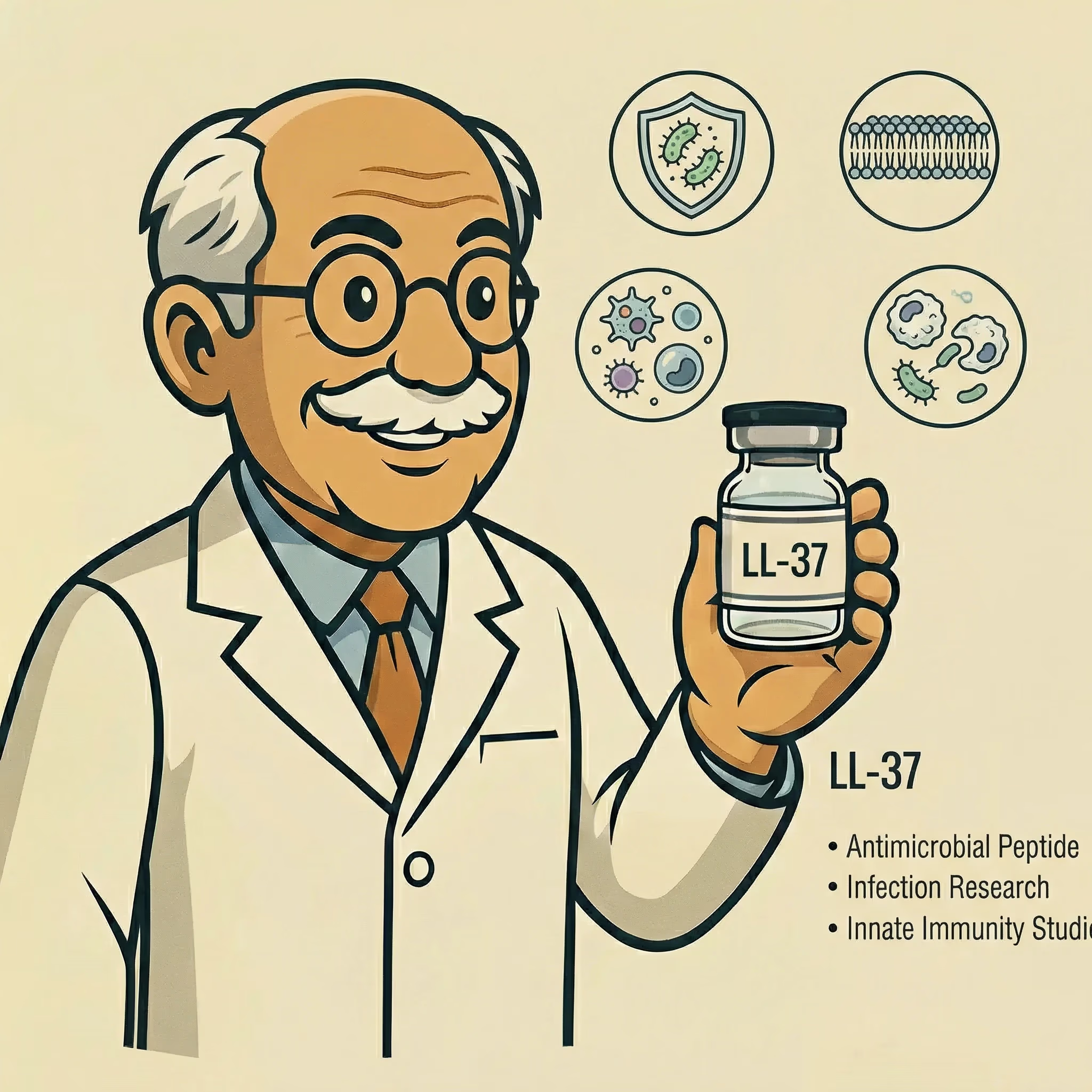
LL-37 is a type of antimicrobial peptide that plays a crucial role in the innate immune response against infections [7]. It has gained significant interest due to its broad spectrum of antimicrobial activity, extending to multidrug-resistant pathogens [8]. This peptide is a part of the cathelicidin family and is produced by various cells in the human body, including immune and epithelial cells [7]. The biological activities of LL-37 include direct antimicrobial actions, wound healing, and modulation of the immune response [2][4]. This review will focus on recent advances in the application of LL-37 in infection studies.
# Preclinical Research
Recent preclinical studies have explored the integration of LL-37 into novel delivery systems to enhance its antimicrobial and wound healing properties. Wang et al. developed a thermosensitive hydrogel loaded with LL-37, which exhibited synergistic antibacterial effects and was shown to promote infected skin wound healing [1]. The hydrogel, a water-swollen network of polymers, can respond to temperature changes, allowing for controlled drug release [1].
Similarly, a study by Dias et al. incorporated LL-37 into extracellular vesicles derived from Edwardsiella piscicida, a bacterium causing infections in aquatic animals [2]. The vesicles increased the stability of LL-37 and boosted its antibacterial and wound-healing activity [2]. Extracellular vesicles are small, membrane-bound structures released by cells, and their ability to transport molecules makes them promising drug delivery systems [2].
Another study used activated carbon-chitosan hydrogel dressings loaded with LL-37 microspheres for the treatment of infected wounds [4]. The dressings demonstrated both antimicrobial and antitoxin properties in vivo [4]. Chitosan, a biodegradable and biocompatible polymer, is often used in wound dressings due to its hemostatic and antimicrobial properties [4].
# Clinical Evidence
Direct human evidence regarding LL-37's effectiveness in infection studies is not present in the provided citations.
# Safety and Limitations
While LL-37 has been shown to possess potent antimicrobial properties, it is also capable of rapidly disrupting colonic epithelial integrity [3]. This suggests that while LL-37 may be beneficial in treating surface wounds, its use in gastrointestinal applications may pose safety concerns due to potential damage to the intestinal epithelium [3].
Furthermore, the di-leucine motif, a specific arrangement of two leucine amino acids, in the LL-37 peptide is essential for initiating autophagy in human macrophages [10]. Autophagy is a cellular process that breaks down and recycles cellular components, and it can be a double-edged sword. While it can help eliminate intracellular pathogens, excessive autophagy may lead to cell death [10]. Therefore, the use of LL-37 as an antimicrobial agent should take into account its potential to induce autophagy.
# Key Takeaways
LL-37 is a promising antimicrobial peptide with potential applications in combating infections and promoting wound healing [1][2][4]. Preclinical studies have demonstrated its successful incorporation into novel delivery systems such as thermosensitive hydrogels, extracellular vesicles, and chitosan hydrogel dressings [1][2][4]. However, its use is not without limitations. LL-37 can disrupt colonic epithelial integrity, which may limit its use in gastrointestinal applications [3]. Furthermore, the peptide's ability to initiate autophagy in human macrophages could potentially lead to cell death if not properly regulated [10]. Further studies are needed to fully understand the potential of LL-37 in infection studies and to address its limitations.
Last updated: January 13, 2026