Anti-Aging Peptides Intermediate Level 3 min read
GHK-Cu: Copper Peptide Research in Tissue Regeneration
GHK-Cu research examines copper peptide applications in tissue regeneration and wound healing protocols. Clinical studies investigate collagen synthesis stimula...
By Professor Peptides Editorial Team
January 1, 2025
484 words
# GHK-Cu: Copper Peptide Research in Tissue Regeneration
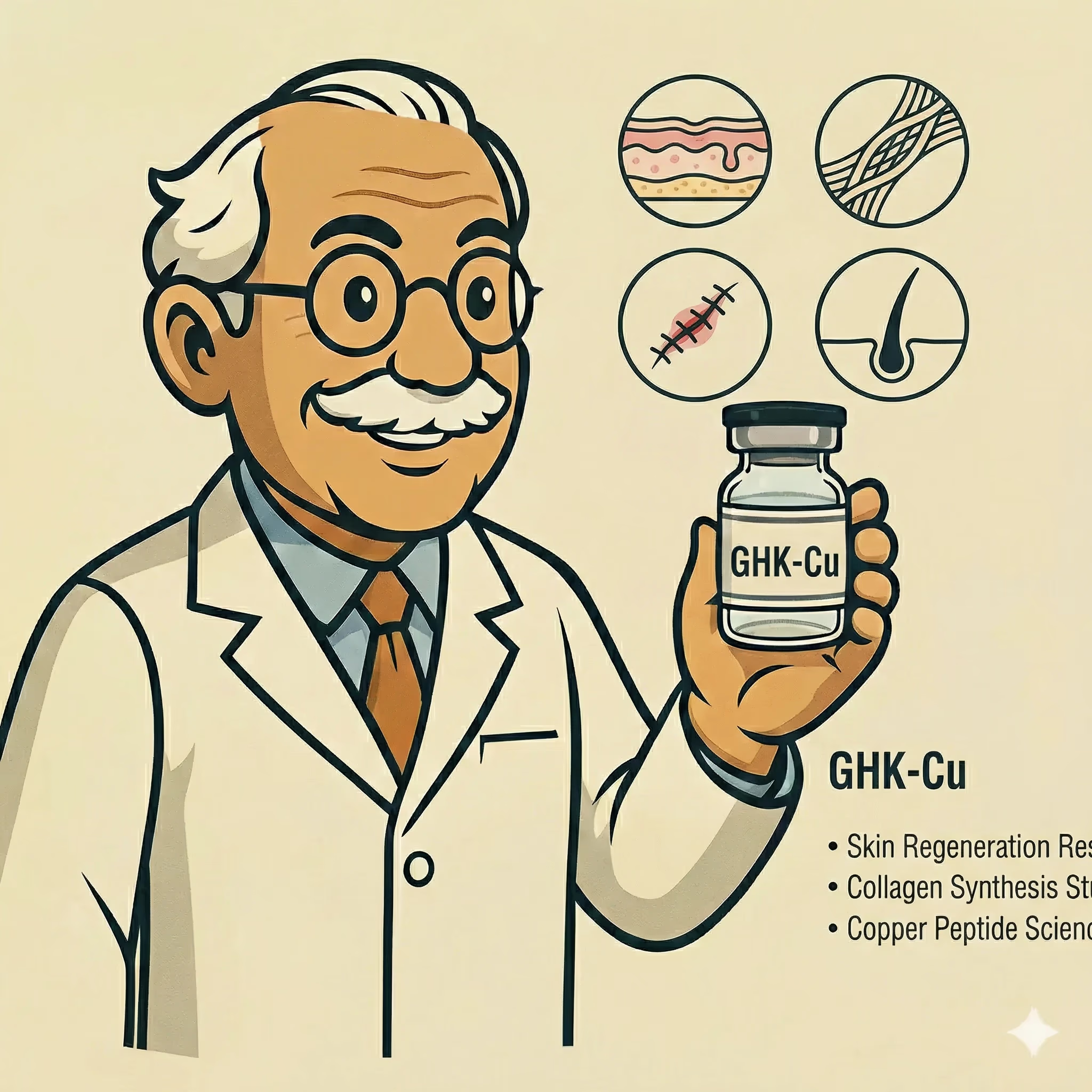
GHK-Cu, or copper peptide, is a naturally occurring complex in the human body. It is composed of the tripeptide Gly-His-Lys (GHK) and copper ions (Cu). This peptide has been widely studied for its regenerative properties, particularly in wound healing and tissue regeneration.
## Preclinical Research
In preclinical studies, GHK-Cu has demonstrated promising effects on tissue regeneration. A study where a biotinylated GHK peptide was incorporated into a collagenous matrix showed that this novel biomaterial significantly enhanced dermal wound healing in rats [1]. The GHK peptide has also been found to modulate multiple cellular pathways involved in skin regeneration [3].
Moreover, GHK-Cu has been shown to increase the secretion of transforming growth factor-beta (TGF-β) in human dermal fibroblasts, a cell type crucial for wound healing and tissue repair [2]. TGF-β is a pivotal cytokine, or small protein, that controls a wide range of cellular processes including cell growth, proliferation, differentiation, and apoptosis (programmed cell death) [2].
In a study on biomimetic hydrogel scaffolds with copper peptide-functionalized RADA16 nanofiber, the scaffolds improved wound healing in models of diabetes, suggesting potential applications of GHK-Cu in chronic wound management [4]. Furthermore, a food-derived tripeptide-copper self-healing hydrogel was found to be effective for infected wound healing [5].
## Clinical Evidence
Despite the promising preclinical findings, there is a lack of direct human trial evidence in the provided citations to support the use of GHK-Cu in tissue regeneration. Future clinical trials are needed to confirm the efficacy and safety of GHK-Cu in human subjects.
## Safety and Limitations
While preclinical studies indicate that GHK-Cu has regenerative properties, it is crucial to note that these findings need to be validated in human studies. Possible limitations in translating these results into clinical practice include potential differences in the response to GHK-Cu between humans and experimental models, and the safety profile of GHK-Cu in humans is yet to be fully elucidated.
In the context of wound healing, the use of GHK-Cu may be limited by factors such as the severity and type of wound, the presence of infection, and individual patient characteristics. Additionally, the formulation and delivery of GHK-Cu, such as in a hydrogel or nanofiber scaffold, may influence its efficacy and safety [4,5].
## Key Takeaways
GHK-Cu, or copper peptide, is a promising agent for tissue regeneration, with a body of preclinical research supporting its potential use in wound healing and other regenerative applications. It has been shown to enhance wound healing in animal models, modulate cellular pathways involved in skin regeneration, and increase the secretion of TGF-β, a key cytokine in tissue repair [1,2,3].
However, direct human evidence from clinical trials is currently lacking in the provided citations, and the safety and limitations of GHK-Cu use in humans need further investigation. Future research should focus on clinical trials to validate the efficacy and safety of GHK-Cu in tissue regeneration in human subjects [6,7,8].
Research Disclaimer: This content is for educational and research purposes only. Not intended as medical advice. Always consult qualified healthcare professionals for medical guidance. Information presented is based on current research which may be preliminary or ongoing.
Last updated: January 13, 2026