Healing & Recovery 4 min read
BPC-157: The Ultimate Healing and Recovery Peptide
Discover how BPC-157 accelerates healing and enhances recovery for optimal health.
By Professor Peptides Editorial Team
September 15, 2024
676 words
# Introduction to BPC-157
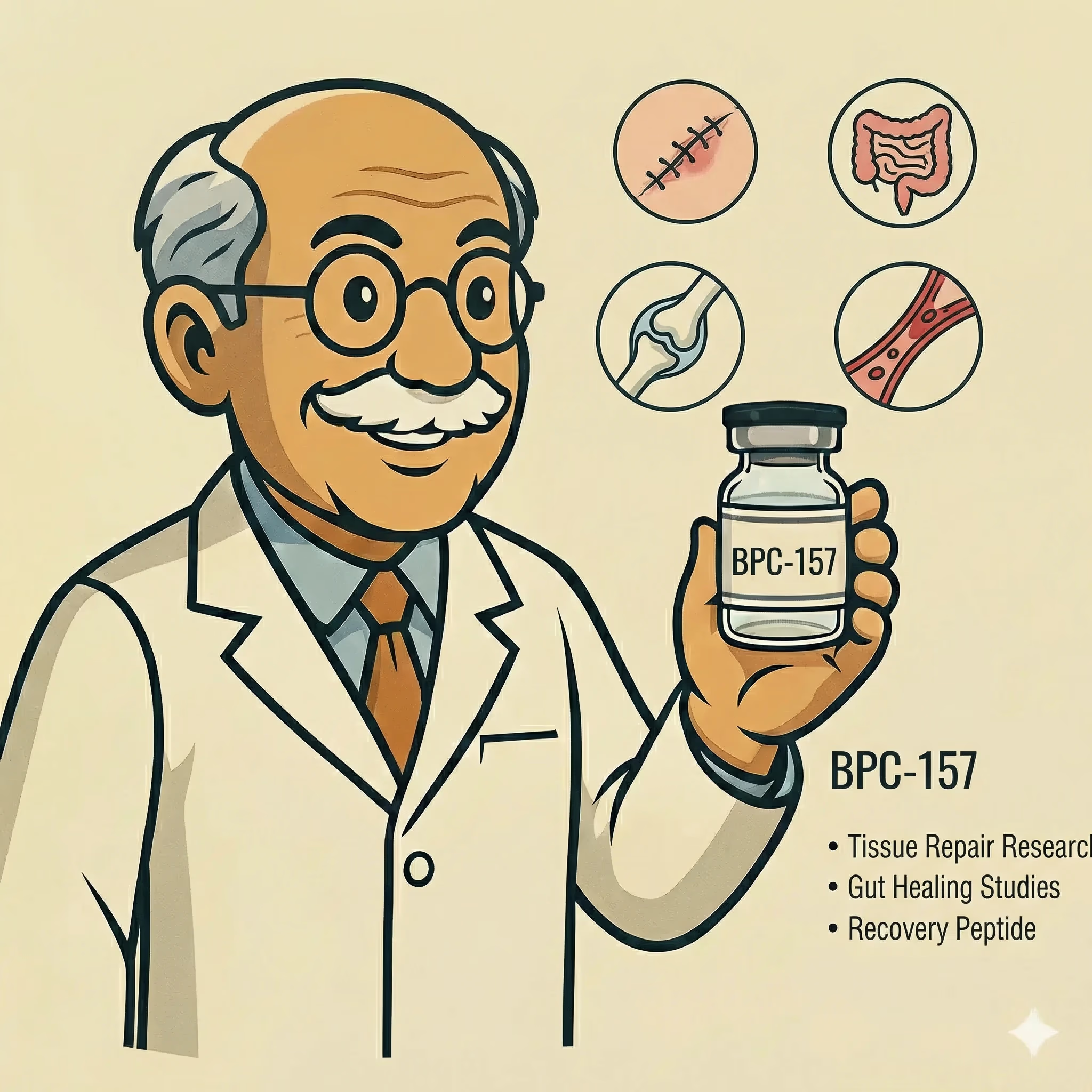
BPC-157, also known as gastric pentadecapeptide BPC-157, is a peptide sequence derived from the human gastric juice [1]. It has been extensively investigated for its potential therapeutic effects, particularly in healing and recovery processes across various medical and biochemical contexts. This review article aims to critically evaluate the scientific evidence surrounding BPC-157's functions and applications, focusing on preclinical research, clinical evidence, safety concerns, and limitations.
# Preclinical Research
## BPC-157 in Gastrointestinal Health
BPC-157 has been primarily investigated for its potential benefits on the gastrointestinal tract. Wang et al. (2019) suggested that BPC-157 exerts a cytoprotective mechanism in the gastrointestinal tract and cultured enteric neurons and glial cells [1]. This gastric peptide appears to protect cells from damage, possibly playing a role in the prevention or treatment of gastrointestinal disorders.
## BPC-157 and Bone Healing
Further research has highlighted BPC-157's potential osteogenic effects. Sebecić et al. (1999) found that BPC-157 accelerated the healing of segmental bone defects in rabbits, demonstrating similar efficacy to bone marrow and autologous cortical bone implants [2]. This suggests a potential role for BPC-157 in bone healing and recovery [2].
## BPC-157 in Burn Healing
The healing properties of BPC-157 have also been explored in the context of burns. Sikirić et al. (2003) found that BPC-157 creams enhanced the healing process in burned mice, even in those with corticosteroid-impaired healing [3]. This indicates the possible utility of BPC-157 in wound and burn recovery.
## BPC-157 in Cardiovascular Health
BPC-157 has also been studied for its potential benefits in cardiovascular health. Lovric-Bencic et al. (2004) found that BPC-157 reversed doxorubicin-induced congestive heart failure and increased big endothelin-1 plasma concentration in rat and mouse models [4]. This suggests that BPC-157 may offer therapeutic potential in managing cardiovascular conditions.
## BPC-157 in Mental Health
In the context of mental health, BPC-157 has been investigated for its potential anxiolytic effects. Sikirić et al. (2001) found that BPC-157 demonstrated anxiolytic effects in rats, as evidenced in shock probe/burying tests and light/dark tests [5]. This highlights the potential for BPC-157 to be used as a novel therapeutic agent in the treatment of anxiety disorders.
## BPC-157 and Serotonin Synthesis
The effects of BPC-157 on serotonin synthesis in the brain have also been investigated. Tohyama et al. (2004) found that BPC-157 influenced regional serotonin synthesis in the rat brain, as shown by alpha-methyl-L-tryptophan autoradiographic measurements [6].
# Clinical Evidence
Despite the promising preclinical evidence, direct human evidence regarding BPC-157's therapeutic potential is limited.
## BPC-157 and Angiogenesis
Hsieh et al. (2017) found that BPC-157's pro-angiogenic potential is associated with VEGFR2 activation and up-regulation [7]. This may suggest a potential role for BPC-157 in promoting wound healing and tissue regeneration in clinical settings.
## BPC-157's Potential Role in Cancer Cachexia
BPC-157 has also been explored for its potential role in cancer cachexia, a complex metabolic syndrome associated with underlying illness and characterized by muscle loss. Kang et al. (2018) suggested that BPC-157 may be a potential agent for rescuing from cancer cachexia [8]. However, further research is necessary to validate this claim in clinical settings.
# Safety and Limitations
The safety of BPC-157 has been explored in a pilot study by Lee and Burgess (2025), who found that the intravenous infusion of BPC-157 was generally safe in humans [10]. However, further large-scale clinical trials are needed to fully establish the safety profile of BPC-157.
The metabolic profile of BPC-157 has also been studied for its implications in doping control. Tian et al. (2023) used a stable isotope labeling-based nontargeted strategy to characterize the in vitro metabolic profile of BPC-157, suggesting its potential misuse in sports [9].
# Key Takeaways
BPC-157, a gastric pentadecapeptide, has shown promising potential in preclinical studies for a variety of therapeutic applications, including gastrointestinal health, bone healing, burn recovery, cardiovascular health, mental health, and serotonin synthesis. However, direct human evidence is limited, and the safety profile of BPC-157 is yet to be fully established. Large-scale clinical trials are needed to validate these findings and to explore other potential therapeutic applications of BPC-157.
Last updated: January 13, 2026