Dosing & Administration 4 min read
Bacteriostatic Water vs Sterile Water in Research
Bacteriostatic versus sterile water selection requires understanding preservation mechanisms and research application requirements. Bacteriostatic water contain...
By Professor Peptides Editorial Team
January 1, 2025
751 words
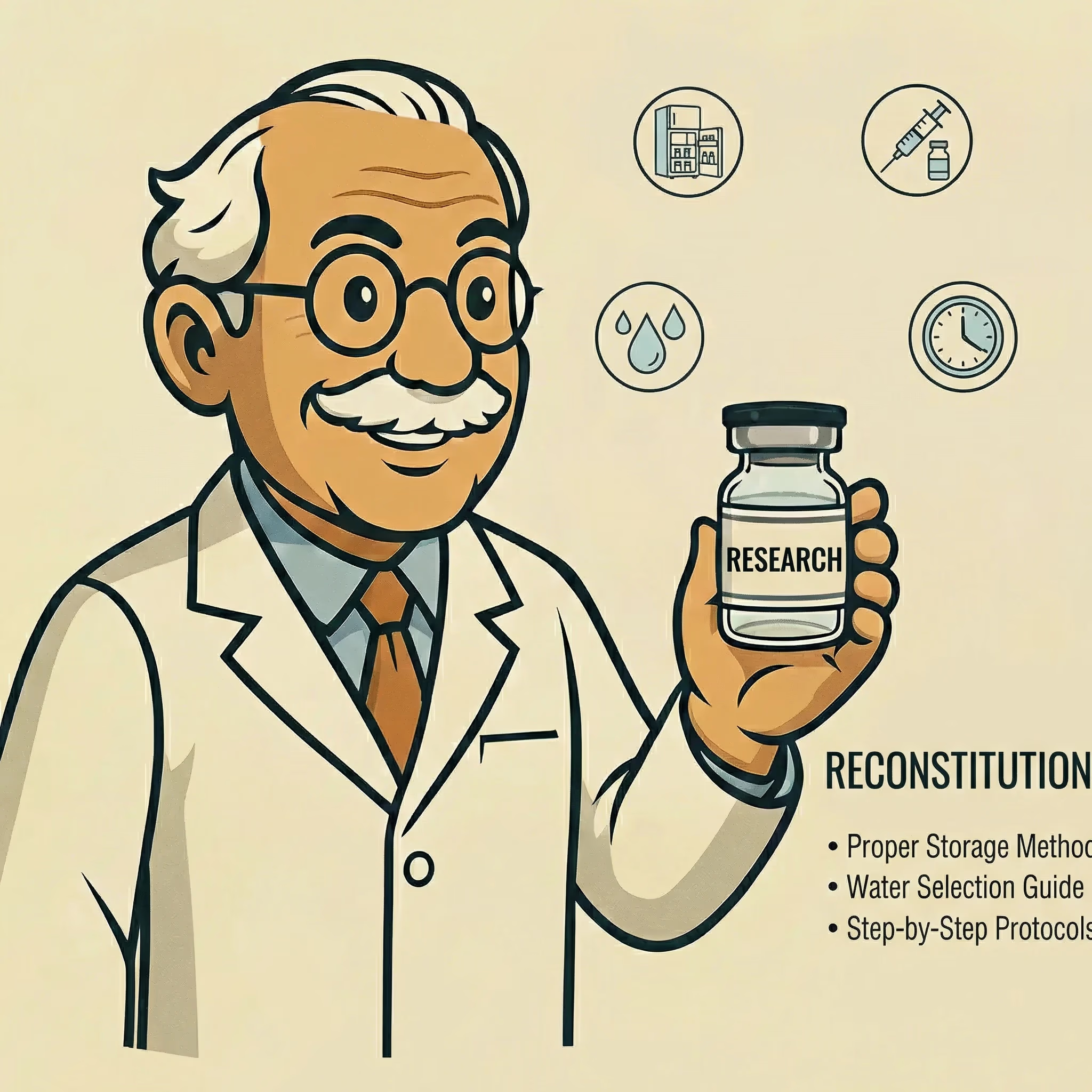
# Bacteriostatic Water vs Sterile Water in Research
Bacteriostatic Water and Sterile Water are both used in various research applications, but they have some key differences in their properties and potential uses. The choice between these two types of water depends on several factors, including the nature of the research, the specific requirements of the experiment, and the potential impact of the water on the results.
## Bacteriostatic Water
Bacteriostatic Water is water that has been treated to inhibit the growth and reproduction of bacteria. This is typically achieved through the addition of a bacteriostat, a substance that inhibits bacterial growth without necessarily killing the bacteria [1]. Bacteriostatic water is often used in research applications where it is critical to prevent bacterial contamination, such as in the preparation of solutions for cell culture experiments [1].
## Sterile Water
Sterile Water, on the other hand, is water that has been treated to remove all microorganisms, including bacteria, viruses, and fungi [2]. This is typically achieved through a process of filtration and/or heat treatment. Sterile water is often used in research applications where it is important to eliminate all potential sources of contamination, such as in the preparation of reagents for molecular biology experiments [2].
# Preclinical Research
Preclinical research has shown that both bacteriostatic water and sterile water can be effective in preventing microbial contamination in laboratory settings [3][5]. However, the specific requirements of the experiment may dictate which type of water is most appropriate.
For instance, studies have shown that bacteriostatic water can be effective in preventing bacterial growth in cell culture experiments [3]. This can be particularly important in long-term cultures, where the risk of bacterial contamination is high. However, the use of bacteriostatic water may not be appropriate in all cases, as the bacteriostat could potentially interfere with the experiment [5].
Sterile water, on the other hand, can be used to prepare reagents for molecular biology experiments [2], where even a small amount of microbial contamination could potentially interfere with the results. However, the process of sterilizing the water can potentially alter its properties, which could affect the results of the experiment [4].
# Clinical Evidence
In clinical settings, both bacteriostatic water and sterile water have been used effectively. For instance, sterile water has been used for reconstituting pharmaceuticals for injection [9]. In this setting, sterile water can help to ensure that the medication is free from microbial contamination, thereby reducing the risk of infection.
Bacteriostatic water, on the other hand, has been used for reconstituting vaccines for aerosol administration [10]. In this setting, the bacteriostat can help to prevent bacterial growth in the vaccine, thereby increasing its shelf life and reducing the risk of contamination.
# Safety and Limitations
Both bacteriostatic water and sterile water are generally considered safe for use in research and clinical settings. However, there are some potential limitations and safety considerations that must be taken into account.
For instance, the bacteriostat used in bacteriostatic water could potentially have cytotoxic effects, particularly in sensitive cell cultures [3]. Therefore, it is important to carefully consider the potential impact of the bacteriostat on the experiment.
Similarly, the process of sterilizing water can potentially alter its properties, which could affect the results of certain experiments [4]. Therefore, it is important to consider the potential impact of sterilization on the water's properties when choosing between sterile water and bacteriostatic water.
# Key Takeaways
Bacteriostatic Water and Sterile Water are both used in various research applications, with the choice between the two depending largely on the specific requirements of the experiment and the potential impact of the water on the results.
While both types of water can be effective in preventing microbial contamination, there are some key differences in their properties and potential uses. Bacteriostatic water, for instance, inhibits bacterial growth without necessarily killing the bacteria, making it suitable for long-term cell culture experiments. Sterile water, on the other hand, is free from all microorganisms, making it suitable for preparing reagents for molecular biology experiments.
In clinical settings, sterile water has been used effectively for reconstituting pharmaceuticals for injection, while bacteriostatic water has been used for reconstituting vaccines for aerosol administration.
However, there are some potential limitations and safety considerations associated with both types of water. The bacteriostat used in bacteriostatic water could potentially have cytotoxic effects, while the process of sterilizing water can potentially alter its properties. Therefore, it is important to carefully consider these factors when choosing between bacteriostatic water and sterile water for research or clinical applications.
Last updated: January 14, 2026